
Living in Ho Chi Minh City: What Surprised Me Most
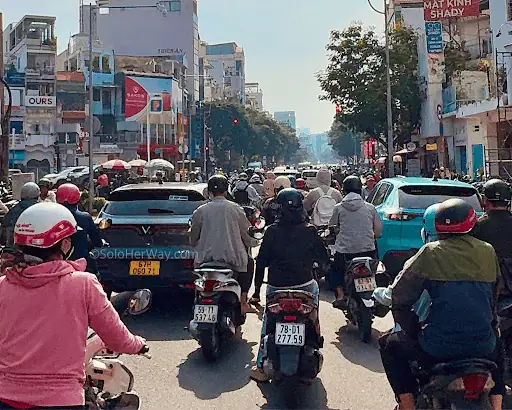
As the light turned green and I stepped off the curb, my heart raced; scooters flew by me in a steady stream, with no signs of slowing down. I questioned myself: did I make a mistake? Was the light really green?
Then I remembered something I’d overheard at a cafe: never hesitate, keep walking; the scooters will gauge your pace and go around you. So I kept moving, silently praying the whole way across. Once I made it safely to the other side, I took a deep breath and asked myself: will this get easier?
This wasn’t my first trip to Vietnam; I’d been to Ho Chi Minh City before and traveled extensively around the rest of the country.
This time was different. I settled into a quiet, local neighborhood, built a daily routine, and formed real relationships with the people around me, and that’s where these firsthand insights come from. A quick trip to Vietnam shows you what to see, but settling into local life shows you how things actually work here.
The opening moment I shared crossing the street makes more sense once you know the scale of what you’re stepping into. Ho Chi Minh City has over 8 million motorbikes moving through the city every day, with beeping horns ringing out at nearly every moment.
It’s sensory overload at first, but once you settle into a neighborhood, that chaos fades into background noise, and daily life finds its own easy flow.
The friendships I built with the locals around me gave me a real perspective on everyday life here, not just the version tourists see. I hope these insights help guide you to a fulfilling visit, whether you’re coming for two weeks or thinking about making this your home.
What Surprised Me Most About Living in Ho Chi Minh and What You Should Know
The Traffic Isn’t Just Busy; It’s a New Way to Navigate
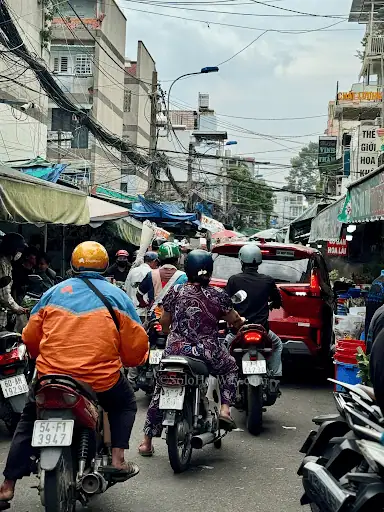
Nothing prepares you for Ho Chi Minh City traffic. Road rules here function more like suggestions than rules: scooters run red lights, drive on sidewalks to avoid congestion, and park wherever there’s space, often pushing pedestrians off the sidewalk and into the road. Crossing the street in Vietnam takes real practice, and even marked crosswalks don’t guarantee safety.
The constant beeping takes some adjustment too. Back home, a honk usually signals frustration or a mistake; here, it’s simply a heads-up that a scooter or car is nearby.
Once that clicks, crossing gets much easier: step off the curb with confidence, keep a steady pace, and never stop mid-crossing. With practice, it becomes second nature.
The Friendliest People Aren’t Always Where You Expect

Vietnamese people are genuinely warm, but where you experience that hospitality depends on where you spend your time. In the tourist-heavy areas of Districts 1 and 3, now officially known as wards, I found people more business-minded and guarded than elsewhere in the city.
When I asked locals why, many told me it comes down to years of being disrespected by visitors. Spending time in a local neighborhood in Ho Chi Minh City just outside the tourist core made all the difference; that’s where I found people to be far more relaxed and open.
That warmth shows up in small, unexpected ways. Many young people learn English in school but rarely get the chance to practice with a native speaker, so a college student or young adult might strike up a conversation with you out of nowhere.
Don’t assume they’re after something; most genuinely want to practice their English. And if you get a “no,” it might not be a real one; many people would rather say it than admit they didn’t understand you, so try showing your request on Google Translate before accepting the answer as final.

That same willingness to help shows up in bigger ways too. Once, I asked a cosmetics store if they carried an item I needed. The employee disappeared without a word, and I assumed I’d been blown off.
Five minutes later, she came back with exactly what I’d asked for, proof that patience here is almost always rewarded.
The same patience applies to something as simple as ordering coffee. A barista might take five to ten minutes to prepare your drink, but in Vietnam, coffee isn’t something to rush through; it’s a social practice, made with care.
Trust, Tipping, and Staying Scam-Aware
You’ve probably heard the warnings before you even booked your flight: phones snatched from hands, vendors swapping bills, tourists overcharged without realizing it.
Some of that is true, but the real picture is more specific than most people assume, and knowing exactly where the risks are makes all the difference.
Honesty and tipping. In local areas, whenever I mishandled currency, people corrected me rather than pocketing the difference.
Is tipping expected in Vietnam? It isn’t a Vietnamese custom, though tourist-zone vendors have learned that foreigners tip and will expect it anyway. Skip the tip, or leave a little extra only for standout service, and check your bill first, since many restaurants already build in a service charge.
Protecting your money day to day. Use the Grab app instead of hailing a taxi, since it helps you avoid overcharging or rigged meters.
When handing over a large note, say the amount out loud and display it clearly, since many bills look similar. In tourist areas, always confirm you’re being charged in Dong, not USD, and select local currency when paying by card.
When using ATM’s I preferred secure mall settings and outside banks. When taking out local currency, opt for without conversion to get the best rate from your bank.
At the airport. Tan Son Nhat Airport (SGN) has its own quirks. The food court’s default currency is often USD when paying by card, so ask them to charge you in Dong instead.
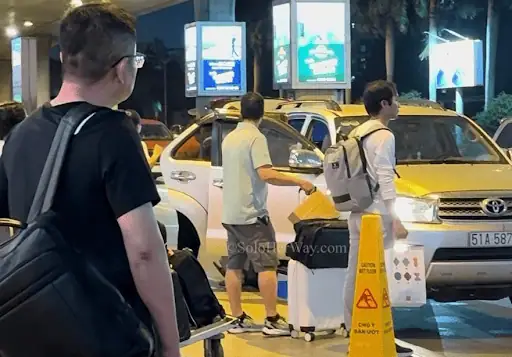
Near the pickup area, men will sometimes approach, claiming to be a Grab driver and offering a “faster car,” but they’re not actually with Grab.
They can be persistent, so a polite “no thanks” and walking away works better than getting drawn into a conversation. Only get into a car that matches the name and plate shown in your own app.

Scams actually happen
Scams in Ho Chi Minh City are heavily concentrated in and around Ben Thanh Market, the Saigon Central Post Office, and Bach Dang Wharf. I never experienced any scam-like activity in the local neighborhoods where I spent most of my time.
Plan for Heat Every Month of the Year
Vietnam takes heat to a new level. The hottest stretch of the dry season runs from March through April, while the rainy season, roughly May through October, brings sudden, torrential afternoon showers almost daily. A lightweight umbrella earns its keep year-round; it protects you from those storms and doubles as shade from the sun.
Temperatures stay warm year-round, but humidity is what really shifts. In winter (the dry season), Ho Chi Minh City weather runs in the 70s to low 80s with low humidity, while summer (the rainy season) climbs into the high 80s and low 90s and feels brutally hotter because of it. When booking an apartment, confirm that air conditioning is included; a room fan alone won’t cut it.
You’ll also notice something that seems counterintuitive at first: locals wearing long sleeves and hoodies even in blazing heat. It’s not overheating; it’s sun protection, often called áo chống nắng, and it’s worth understanding rather than being surprised by it.
Staying cool matters just as much as staying covered. Pools aren’t common in local apartments, so when residents want a real escape from the heat, many head to Suoi Tien Water Park, part water park and part theme park, connected directly to Metro Line 1. Dam Sen Water Park is a closer option if you want to cool off for an afternoon.
What You Wear Changes How You’re Treated
The way you dress isn’t just about modesty; it’s about not being instantly read as a tourist. Dressing like locals, or like expats who live and work here long-term, often means wearing long pants, longer dresses, and business-casual pieces, which changes how people interact with you.
Locals can’t always tell at a glance whether you’re a foreigner visiting, a longtime expat, or someone doing business here, and that ambiguity works in your favor: it means less unwanted attention and fewer inflated “tourist prices.”
If you’re visiting temples or historic sites, dress matters for a different reason entirely: many require conservative clothing, and showing up appropriately covered means you can walk right in instead of being turned away or handed a wrap-around cover-up at the entrance.
Shorter, more fitted outfits are completely normal for Ho Chi Minh City nightlife and rooftop settings, and locals dress the same way.
Eating Well Takes a Little Strategy
The $2 street meals you see all over social media aren’t sustainable for a healthy daily routine if you’re actually living here, so it helps to know where to save and where it’s worth spending a little more
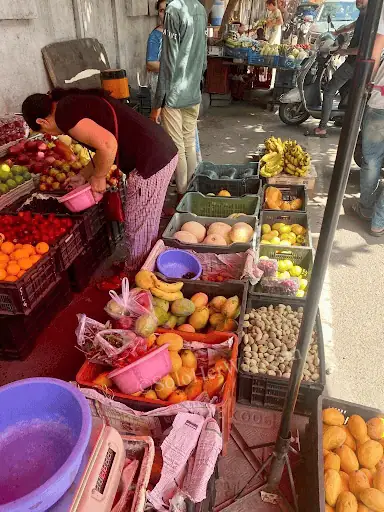
Where to save: Buy fruits and vegetables you can peel, such as avocados, onions, dragon fruit, pineapple, and watermelon from your local market. Skip anything that can’t be peeled, since inconsistent growing practices here are where most expats end up sick.
Local bakeries are great for bread and buns; skip cream-filled items at smaller shops because refrigeration can be inconsistent.
Coffee and tea from local cafes are excellent value. Be more cautious with street carts if you are ordering drinks with ice, like iced coffee or juice. Buy bottled water by the case, too; you’ll go through more than you expect once you factor in cooking, brushing your teeth, and washing produce.
Where to spend more
Skip local markets for protein, fish, and eggs, since most of these items aren’t refrigerated and are often left in the daily heat.

Dairy from Da Lat, on the other hand, is genuinely excellent at big chain and expat stores. My regulars are Annam Gourmet, which is also great for takeaway salads and cooked seafood; Winmart for water and household basics; and Aeon for berries, non-peelable produce, and dairy. For quick dairy or whole fruit, GS25, 7-Eleven, and mini Winmart+ locations work well too, and all are accessible through Grab for delivery.
Drinks and delivery
Beer in restaurants is affordable but served warm, with ice on the side. Wine is pricier and typically sold by the bottle, but you can take home what you don’t finish, and local wine shops beat expat-store prices.
One of my favorite discoveries: some expat markets have small cafes built right in, and they’ll let you pick out a beer or wine straight off the shelf and open it for you at no extra charge so that you can enjoy it with a snack or meal on the spot.
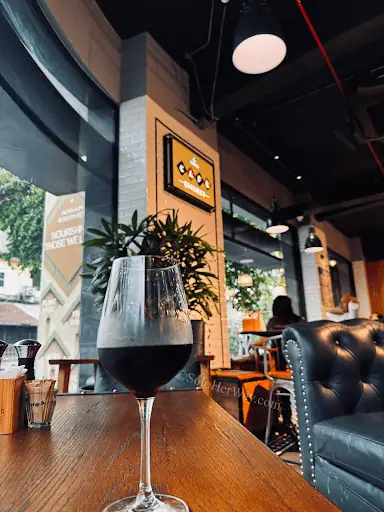
Annam Gourmet on Hai Ba Trung is a great example; the second floor has floor-to-ceiling windows overlooking the city, with food, coffee, and fresh-baked items available, making this cafe a genuinely relaxing spot to sit with a drink or a coffee and take in the city vibes.
The food is genuinely good, and noticeably cheaper than eating at a full expat restaurant. For everything else, GrabFood and ShopeeFood make ordering easy without a trip to the store.
Real cost example. Cost of living in Ho Chi Minh City
10 days of groceries and household items at large chain stores ran about 2,622,000 VND, or roughly $101 USD, though that was a holiday stock-up since I normally shopped weekly.
A single local fruit-market trip, including watermelon, avocados, onions, garlic, dragon fruit, kiwi, custard apple, and mango, cost 312,000 VND, about $12 USD. A bunch of sunflowers costs 52,100 VND, about $2 USD.
What’s a Deal, What’s Not
Great deals
Nails, hair shampoo and blowouts, coffee, lunches out, transportation, cleaning services, bakery items, and getting clothing custom-tailored, something that’s usually a luxury back home but easy to access here.
Location matters more than people realize. I once asked a tourist-area nail salon for the same gel manicure I get at my neighborhood salon for 573,000 VND (about $22 USD); they quoted me 1,200,000 VND, more than double, for the identical service. I passed and went back to my regular salon instead.
Museums are another good deal; the Vietnamese Women’s Museum is free, while the War Remnants Museum runs about 40,000 VND ($1.60 USD), with fees sometimes waived on holidays. Most don’t require a guide, and the ticket office often offers free multilingual tours if you ask.
Surprisingly expensive
Massages, day spas, facials, cosmetics, wine, night venues, and gyms.
A 60-minute massage at a mid-to-upper-tier salon runs $38–50 USD, noticeably more than Thailand, and many salons try to upsell premium oils on top of that. Pilates runs a similar $38 USD per class and up, with studios often smaller than what you’d find in most Western countries, making scheduling a challenge.
The same gap shows up with hair: tourist-area blowouts run 800,000 VND (about $30 USD) and up, while my go-to spot, Cham Hair Salon, charges 360,000 VND (about $13 USD) using quality products with excellent results. 10–15 minutes outside the tourist zone can cut your costs in half without sacrificing quality.
The pattern holds across most categories: for pricier services, staying outside tourist areas will consistently save you money. These tourist-zone prices might still look like a bargain depending on where you’re from, but if you’re living here or slow traveling, those extra charges add up fast, and they’re rarely necessary.
Stock Up on Supplements Before You Land
For slow travelers or anyone staying long-term, this matters most. If you rely on a specific supplement, bring enough for your entire visit, since selection is limited and quality can be inconsistent compared to Bangkok, Malaysia, or Singapore.
If you’re flexible on brands, you can usually find a local alternative, though expect to pay more. If you’re planning a visa run to Bangkok or Kuala Lumpur, that’s a great chance to restock with a wider variety at better prices, accounting for the extra luggage weight on the way back.
The same applies to brand-name makeup, skincare, and electronics: they’re available, but selection is limited, and prices are higher. Counterfeit perfume is common enough that I found it is worth sticking to authorized retailers.
Clothing Sizes Run Small
Sizing follows a similar pattern. Both clothing and shoes run smaller here than in the West. Even though many international brands manufacture in Vietnam, the clothing is made for export, not sold locally in those sizes, so a US 6–8, fairly average in the West, is often labeled 3XL here.
Clothes and shoes are a bargain if you’re smaller-framed; above a US 6–8, plan to bring what you need or get things custom-made.
Getting Around Is Easy; Budget Extra Time
Grab app makes transport cheap and simple, and tipping isn’t expected. Traffic itself can be brutal. In my experience, it’s worse than Bangkok and Malaysia combined. Plan on 90 minutes or more during rush hour.
Public transit itself is still limited. Line 1 of the Ho Chi Minh City metro runs a single route from Ben Thanh to Suoi Tien; tickets run 7,000–20,000 VND (about $0.27–$0.79 USD) per trip, cheaper than Grab if your route lines up, but it’s not a citywide solution yet. Line 2 broke ground in early 2026 and isn’t expected to open until around 2030.
Buses exist but aren’t especially tourist-friendly. Hop-on hop-off buses also exist for tourists, but they’re privately run and cover only major attractions, not everyday neighborhoods. In practice, Grab remains the most reliable way to get around for now.
A few things I only learned from living in a local neighborhood
Is tap water safe in Vietnam?
Tap water is fine for bathing, washing dishes, and doing laundry, but I stuck with bottled water for brushing my teeth. Showering and washing my face with tap water never caused me any issues.
For dishes, wash them with soap and tap water as usual, then let them air dry completely rather than towel-drying; this is actually the safer method, since a dish towel can spread more bacteria than the water itself. Make sure they’re fully dry before stacking or putting them away.
For laundry, I used the washer with warm water and hung clothes to dry as most locals do; some apartments also come with a washer-dryer combo if you prefer that. Bottled water is the safer choice for drinking, brushing your teeth, cooking, and rinsing produce.
Healthcare in Ho Chi Minh City is genuinely good, and surprisingly affordable. Air pollution here is a real, year-round concern, not seasonal, and the heat only intensifies it, making it a legitimate issue for anyone with respiratory sensitivity.
When I developed a sinus infection, I saw an English-speaking specialist without an appointment, received a thorough exam with modern equipment, plus a prescription and treatment, for 1,430,000 VND (about $54.84 USD).
A follow-up visit ran 859,592 VND (about $33 USD). Payment was out of pocket, though Vinmec Central Park International Hospital provided full paperwork for reimbursement claims.
Health insurance is still worth having, but paying cash for care here that matches or beats the US healthcare system is genuinely within reach.
Is tipping expected in Vietnam?
It isn’t a Vietnamese custom, though tourist-zone vendors have learned that foreigners tip and will expect it. In local areas, many vendors are surprised or confused when you leave a tip. A smile and thank you are greatly appreciated by locals.
Hiring help in Ho Chi Minh City is normal here, and far more affordable than people expect.
I hired someone who came daily to clean the floors and bathroom, and took out the trash. Twice a week, they also changed and washed all the bedding and towels, all for $150 USD a month.
If you don’t need daily help, an app like bTaskee lets you book someone on demand, only when you need it.
Many apartments in Ho Chi Minh City are also serviced apartments with these services already built in, though personal laundry is usually billed as an add-on.
Street flooding is real during the rainy season. Certain low-lying streets can flood ankle-deep during heavy downpours.
Locals know which areas to avoid, and you’ll pick up on the pattern quickly too. Grab and locals alike tend to reroute around the same known spots.
How Locals Actually Spend Their Free Time and Have Fun
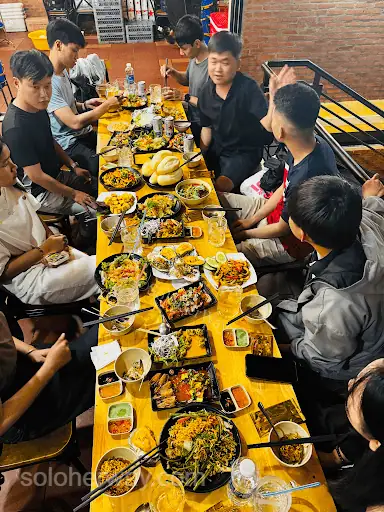
My friends and I would meet up for coffee, day or evening, since it’s as much a social activity here as getting caffeinated. Billiards is genuinely popular and cheap, usually $1–2 USD a game, and places fill up fast in the evenings.
Know that most have both smoking and non-smoking sections, so it’s worth checking if you’re sensitive to smoke. Pickleball and badminton have also picked up fast as an affordable way to exercise and socialize with friends. Hot pot followed by karaoke is a classic, well-loved weekend combination; don’t be surprised if you get pulled into both.

The Real Cost of Living Well in Ho Chi Minh City
You’ve probably seen the social media claims: live in Vietnam for $1,000 a month, apartments for $300–400. That’s not living; that’s existing, and locals usually occupy those apartments. They have large deposits and don’t include electricity, water, or WiFi in the price.
From my own experience living in a local neighborhood for an extended time, rent alone averaged $750–950 USD a month. Prices in Ho Chi Minh City, like other major cities, are rising, and a more realistic monthly budget today is $2,000–2,500 USD all in. That’s not an extravagant lifestyle; it’s a comfortable, healthy one, with room to go out now and then without stressing about unexpected costs like health expenses.
If you enjoy drinking or nightlife regularly, plan on spending noticeably more. Everyday activities, visa costs, and transportation add up faster than people expect. Take these factors into account if you are planning to live in or slow-travel to Ho Chi Minh City and other regions of Vietnam.

Final Thoughts
Was living in Ho Chi Minh City perfect? No. Did it come with steep learning curves? Yes. Was it worth it? Undoubtedly, yes!
What surprised me most wasn’t any single thing; it was realizing I’d found a peaceful, healthy, genuinely good quality of life for a fraction of what it would cost in most Western countries, and even many neighboring countries in Asia. The city’s vibrant energy and the young, driven spirit of its working culture made it easy to connect with people and fall into a daily routine faster than I expected. More than anything, the lasting friendships and letting myself truly absorb into local life made this experience so valuable, and I’m already looking forward to my next visit.
If you have questions, drop a comment or send me a message; I’m always happy to help. Curious what else I’ve learned traveling through Vietnam?
Check out my other articles on Solo Her Way to help you navigate your journey to Vietnam.
Looking for real, current travel information straight from someone actually living it? Subscribe to Tuesday Travel Tips for bi-weekly updates and honest insights.


